

What Every Coder, Provider, and Patient Must Know About Diagnosis Code J18.9 in 2026
If you work in medical billing, clinical documentation, or respiratory care, you almost certainly deal with pneumonia cases on a regular basis. And in most of those cases, before lab results come back, before cultures confirm anything, coders and providers reach for one specific code: diagnosis code J18.9.
It sounds like a simple, catch-all code. However, applying it incorrectly costs practices thousands of dollars in denied claims, audit exposure, and missed reimbursement opportunities every single year. Furthermore, in 2026, payers scrutinize unspecified codes more aggressively than they did even two years ago.
So, this guide covers everything you need to know about J18.9, Pneumonia, Unspecified in 2026. Whether you want to understand its clinical meaning, learn how to use it correctly in billing, identify the danger signs of pneumonia, or simply avoid the most common coding mistakes, this article addresses all of it directly and clearly.
Let us get into it.
What Is the ICD-10 Code for J18.9? The Meaning Behind the Diagnosis
So, what is the ICD-10 code for J18.9 exactly? Let us start with the fundamentals.
Diagnosis code J18.9 stands for “Pneumonia, Unspecified Organism” in the 2026 ICD-10-CM classification system. It sits within Chapter 10, which covers Diseases of the Respiratory System (code range J00-J99). More specifically, it lives under the J18 category, which groups together all pneumonias where the causative organism has not been identified or confirmed.
What “Unspecified Organism” Actually Means
The phrase “unspecified organism” is the key to understanding this code. Essentially, providers use J18.9 when they confirm a diagnosis of pneumonia through clinical symptoms, physical examination, and imaging evidence, but they have not yet identified the specific pathogen responsible for the infection.
Think of it this way. A patient walks into the emergency department with fever, productive cough, and difficulty breathing. A chest X-ray shows pulmonary infiltrates consistent with pneumonia. However, blood cultures and sputum tests are still pending, or they come back inconclusive. In that situation, J18.9 is the appropriate code. It accurately captures what the provider knows at that moment without overstating or fabricating specificity that the record simply does not support.
Clinical Definition and Pathophysiology
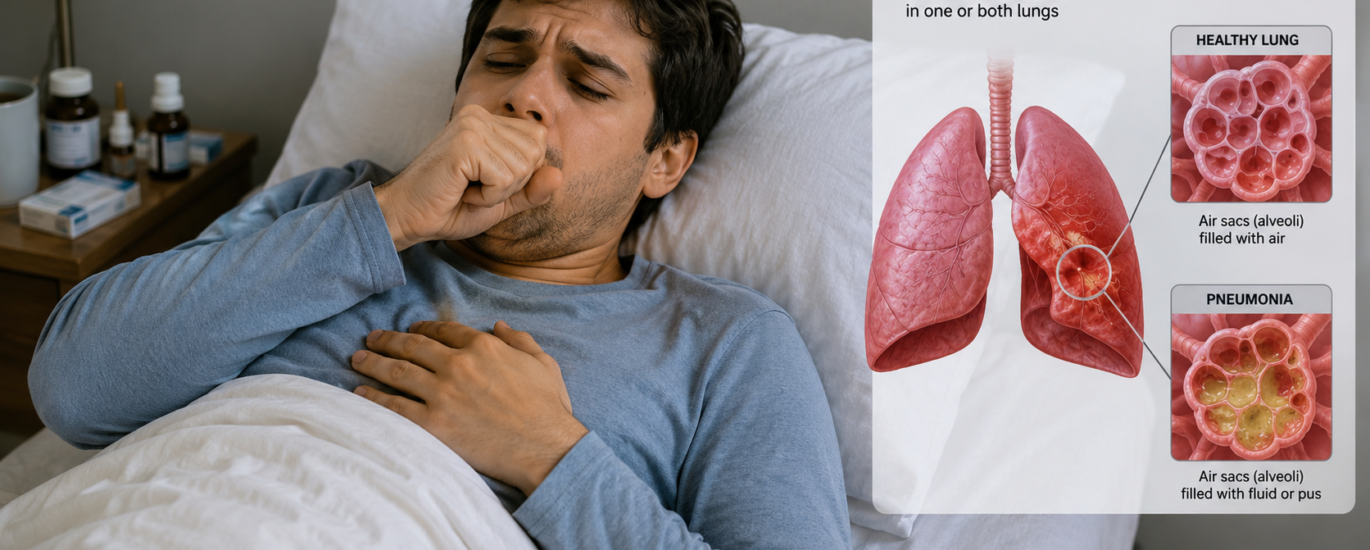
Clinically, pneumonia involves an acute infection of the lung parenchyma, specifically the alveoli (the tiny air sacs responsible for gas exchange). During a pneumonia infection, these alveoli fill with fluid, pus, or cellular debris. As a result, the lungs cannot transfer oxygen into the bloodstream efficiently. This reduction in oxygenation is what produces the shortness of breath, fatigue, and weakness that patients commonly experience.
Additionally, inflammation spreads focally or diffusely across the lung tissue depending on the type and severity of the infection. Various pathogens trigger this response, including bacteria, viruses, fungi, and in some cases, non-infectious causes like radiation therapy or chemical irritants.
Validity Period for 2026
The 2026 edition of ICD-10-CM J18.9 became effective on October 1, 2025. Moreover, it remains valid for HIPAA-covered transactions through September 30, 2026. So, J18.9 is fully billable and current for every claim submitted during this fiscal year.
What Are the Symptoms of J18.9? Recognizing Pneumonia Unspecified
Providers must document clinical findings clearly to justify diagnosis code J18.9 on a claim. Fortunately, pneumonia presents with a fairly recognizable constellation of symptoms, even when the causative organism remains unknown.
Primary Respiratory Symptoms
- A persistent cough that produces mucus, phlegm, or discolored sputum
- Shortness of breath or dyspnea, particularly during activity or at rest in severe cases
- Chest pain that worsens noticeably with deep breathing or coughing
- Crackles or abnormal breath sounds detected during auscultation on physical exam
Systemic Symptoms That Support the Diagnosis
- Fever, typically above 101 degrees Fahrenheit, often accompanied by chills
- Generalized fatigue and significant weakness that limits daily function
- Diaphoresis (excessive sweating), especially at night
- Nausea, vomiting, or appetite loss, especially in elderly patients
Radiographic and Lab Findings
Beyond symptoms alone, providers need objective diagnostic support to code J18.9 accurately:
- Chest X-ray or CT scan showing new pulmonary infiltrates, opacities, or consolidation
- Elevated white blood cell count indicating an active infectious process
- Decreased oxygen saturation on pulse oximetry, sometimes below 94%
- Cultures or PCR tests that return negative, indeterminate, or pending results
The radiographic confirmation of infiltrates, combined with at least two systemic symptoms, forms the clinical foundation that justifies J18.9 as the primary diagnosis. Without imaging evidence, using this code creates significant audit risk.
What Are the Four Danger Signs of Pneumonia?
Every provider, coder, and caregiver should recognize the four danger signs of pneumonia. These warning signals indicate that a patient’s condition has moved from manageable to life-threatening and that hospitalization is likely necessary.
Danger Sign 1: Severe Breathing Difficulty
When a patient struggles to complete a full sentence without pausing for air, or when their respiratory rate climbs above 30 breaths per minute, that represents a genuine emergency. Severe dyspnea signals that the lungs are failing to oxygenate the blood adequately. Consequently, providers must act immediately by ordering oxygen support and initiating inpatient admission.
Danger Sign 2: SpO2 Below 90%
Oxygen saturation below 90% on pulse oximetry indicates serious hypoxemia. Normally, healthy individuals maintain oxygen saturation above 95%. Therefore, a reading below 90% means the lungs are critically compromised, and supplemental oxygen or even mechanical ventilation may become necessary. Coders should note that respiratory failure presenting alongside pneumonia warrants additional diagnosis codes beyond J18.9 alone.
Danger Sign 3: Altered Mental Status or Confusion
Sudden confusion, disorientation, or loss of consciousness in a pneumonia patient signals that the brain is not receiving enough oxygenated blood. This finding appears most commonly in elderly patients and immunocompromised individuals. Additionally, altered mental status often accompanies sepsis, which represents a severe systemic complication that requires immediate escalation of care and additional diagnosis coding.
Danger Sign 4: Hypotension or Septic Shock
A systolic blood pressure below 90 mmHg, especially when combined with fever and pneumonia, strongly suggests septic shock. In this scenario, J18.9 alone does not tell the complete clinical story. Providers must document the sepsis and code it appropriately in addition to the pneumonia code. Moreover, this level of severity significantly affects DRG assignment and reimbursement amounts.
Common Causes of Pneumonia Coded Under J18.9
Providers reach for diagnosis code J18.9 specifically because the causative organism remains unconfirmed. However, understanding the common underlying causes helps providers order the right diagnostic tests, which in turn allows for code upgrades once results confirm a pathogen.
Bacterial Causes (Most Common)
- Streptococcus pneumoniae (the leading bacterial cause of community-acquired pneumonia)
- Staphylococcus aureus, including MRSA in healthcare settings
- Haemophilus influenzae, especially in patients with COPD or other chronic lung conditions
- Klebsiella pneumoniae, frequently seen in immunocompromised or alcohol-dependent patients
Viral Causes
- Influenza A and B, particularly during winter respiratory season
- SARS-CoV-2 (COVID-19), which remains an active cause of pneumonia in 2026
- Respiratory syncytial virus (RSV), most dangerous in elderly and pediatric populations
- Adenovirus and parainfluenza viruses
Atypical and Fungal Causes
- Mycoplasma pneumoniae, known as “walking pneumonia” because patients sometimes remain ambulatory despite infection
- Legionella pneumophila, often traced to contaminated water systems
- Pneumocystis jirovecii (PCP), especially in immunocompromised patients with HIV
Non-Infectious Causes
- Aspiration of oropharyngeal contents, which gets coded differently (do not use J18.9 for aspiration pneumonia)
- Radiation therapy-induced pneumonitis affecting surrounding lung tissue
- Chemical or inhalant exposure causing inflammatory lung damage
Can J18.9 Be a Primary Diagnosis Code?
Yes, absolutely. J18.9 can function as a primary diagnosis code in several clinical scenarios. However, understanding when it works as a primary versus secondary code matters enormously for claim approval and reimbursement accuracy.
When J18.9 Works as the Primary Diagnosis
J18.9 works best as the primary diagnosis in these situations:
- A patient presents to the emergency department or outpatient clinic with active pneumonia symptoms, chest X-ray confirms infiltrates, and no organism is identified or confirmed yet
- During an inpatient admission where clinical and imaging evidence supports pneumonia as the main reason for hospitalization, but culture results remain pending throughout the stay
- During a follow-up visit for resolving pneumonia where the provider documents “resolving pneumonia” without specifying an organism or attributing the infection to another primary condition
When J18.9 Should NOT Lead the Claim
Conversely, J18.9 should not serve as the primary diagnosis in these situations:
- The clinical record clearly identifies a specific causative organism (such as Streptococcus pneumoniae or influenza A). In that case, upgrade to the organism-specific code immediately.
- The pneumonia develops as a complication of a surgical procedure or another primary admission diagnosis. In that situation, the original admission reason takes the primary position.
- The provider documents aspiration pneumonia or pneumonitis due to inhalation. These conditions carry their own distinct codes and should not default to J18.9.
The governing principle is straightforward: J18.9 fits perfectly when the provider documents pneumonia without specifying a causative organism, and no more specific code accurately describes the situation. However, when more clinical detail exists, that detail always takes precedence.
Billing Tips for Diagnosis Code J18.9 in 2026
Getting J18.9 right on the claim form requires more than just knowing when the code applies. Above all, it demands strong documentation, proactive code management, and a clear understanding of how payers evaluate pneumonia claims. Here are the most actionable billing tips for 2026.
Tip 1: Always Confirm Radiographic Evidence First
Before assigning J18.9, confirm that the provider documented radiographic findings in the chart. A chest X-ray or CT scan showing infiltrates, opacities, or consolidation provides the clinical foundation the code needs. Without imaging evidence, auditors will question whether pneumonia was actually confirmed.
Tip 2: Document Culture Status Explicitly
One of the most powerful things a provider can do is explicitly state in the note that culture results are pending, were not performed, or returned indeterminate. That documentation directly justifies the use of “unspecified organism” as the diagnosis descriptor and supports J18.9 against any payer challenge.
Tip 3: Upgrade the Code When Lab Results Return
This step trips up many practices consistently. When culture results or PCR tests later identify a specific organism during the hospital stay or at a follow-up visit, the provider must update the documentation and the coder must upgrade the code. For example, confirmed Streptococcus pneumoniae shifts the code from J18.9 to J13. Confirmed influenza-associated pneumonia shifts it to J09.X1 or J10.00 depending on the strain. Leaving J18.9 in place when a specific pathogen is on record creates compliance risk and often results in lower reimbursement than the more specific code would generate.
Tip 4: Add Complication and Comorbidity Codes to Boost DRG Weight
J18.9 alone generally lands in lower-weighted DRG categories. However, when providers document complications and comorbidities (CCs) or major complications and comorbidities (MCCs), the DRG assignment shifts upward and reimbursement increases substantially. Common MCCs to document alongside J18.9 include respiratory failure (J96.0-), sepsis (A41.9-), or acute kidney injury (N17.9). Therefore, always review the record for complicating conditions and code them accurately.
Tip 5: Pair the Right CPT Codes With J18.9
For outpatient encounters, J18.9 pairs with office visit codes such as CPT 99213 or 99214 for established patients, depending on medical decision complexity. And inpatient admission, CPT 99221 through 99223 cover initial hospital care. For patients receiving respiratory treatment alongside J18.9, CPT 94640 (inhalation treatment for acute airway obstruction) often applies as well.
Tip 6: Build a Code Update Workflow Into Your Revenue Cycle
Many practices collect lab results after billing and never loop that information back to the coding team. As a result, claims go out with J18.9 even when a specific organism is already confirmed. Building a process where updated results trigger a coding review prevents this problem systematically. This workflow directly improves reimbursement accuracy and reduces audit vulnerability.
Related ICD-10 Codes to Know Alongside J18.9
Because pneumonia overlaps with so many other respiratory and systemic conditions, coders routinely work with a cluster of codes around J18.9. Here is a comprehensive reference for 2026 practice.
| Code | Description | When to Use |
|---|---|---|
| J13 | Pneumonia due to Streptococcus pneumoniae | Strep pneumo confirmed by culture or PCR |
| J14 | Pneumonia due to Hemophilus influenzae | H. influenzae confirmed in documentation |
| J15.0 | Pneumonia due to Klebsiella pneumoniae | Klebsiella confirmed by lab results |
| J15.1 | Pneumonia due to Pseudomonas | Pseudomonas confirmed, often healthcare-acquired |
| J15.7 | Pneumonia due to Mycoplasma pneumoniae | Atypical “walking pneumonia” confirmed |
| J12.82 | Pneumonia due to coronavirus (COVID-19) | COVID-19 confirmed with U07.1 |
| J18.0 | Bronchopneumonia, unspecified organism | Bronchopneumonia pattern on imaging, no organism |
| J18.1 | Lobar pneumonia, unspecified organism | Lobar distribution confirmed on imaging |
| J69.0 | Pneumonitis due to inhalation of food | Aspiration pneumonia, do NOT use J18.9 |
| J96.0- | Acute respiratory failure | Respiratory failure complicating pneumonia |
| A41.9 | Sepsis, unspecified organism | Sepsis developing from pneumonia |
| Y95 | Nosocomial condition | Healthcare-acquired pneumonia, pair with J18.9 |
As a rule, always select the most specific code the documentation supports. J18.9 steps in only when that specificity genuinely does not exist in the record.
Common Mistakes Coders and Providers Make With J18.9
Even experienced coders make predictable mistakes with this code. Fortunately, knowing them in advance makes them much easier to avoid.
Mistake 1: Using J18.9 When the Organism Is Already Known
This is, without question, the most frequent and costly mistake. If lab results, culture reports, or provider notes identify a specific pathogen, J18.9 is incorrect. Coders must use the organism-specific code instead. Continuing to bill J18.9 after a pathogen appears in the record is a compliance violation and often results in lower reimbursement than the case actually warrants.
Mistake 2: Coding J18.9 Without Radiographic Confirmation
Some providers document “pneumonia” based solely on clinical presentation without ordering imaging. Without chest X-ray or CT confirmation, using J18.9 creates significant audit exposure. Therefore, coders should always verify that imaging evidence appears in the chart before finalizing this code.
Mistake 3: Failing to Update the Code After Lab Results Return
As mentioned above, many billing teams submit claims before lab results come back and then never revisit the diagnosis code when results arrive. Consequently, J18.9 stays on the claim even when a specific organism is now clearly documented. Building a lab-result tracking process directly into the revenue cycle fixes this consistently.
Mistake 4: Using J18.9 for Aspiration Pneumonia
Aspiration pneumonia results from inhaling food, liquid, or oropharyngeal secretions into the lungs. This is a distinct clinical entity with its own ICD-10 codes, primarily J69.0 (pneumonitis due to inhalation of food and vomit). Using J18.9 for aspiration pneumonia misrepresents the diagnosis and can mislead both payers and clinical staff about the patient’s actual condition.
Mistake 5: Missing Complication Codes That Increase DRG Weight
Providers who document respiratory failure, sepsis, or acute kidney injury alongside pneumonia but whose coders fail to capture those complications leave significant reimbursement on the table. Moreover, missing MCC codes also understates the clinical complexity of the encounter. Always review the full chart for complicating conditions before finalizing the claim.
Mistake 6: Using J18.9 as the Primary Code When Another Condition Drives the Admission
When a patient enters the hospital primarily for a surgical procedure or another primary condition, and pneumonia develops as a complication, the original admission diagnosis takes the primary position. Placing J18.9 first in that scenario contradicts proper sequencing guidelines and can trigger a denial.
2026 Updates: What Is New for Diagnosis Code J18.9 This Year
The 2026 ICD-10-CM edition, effective October 1, 2025, keeps J18.9 active and fully billable. However, several important developments in 2026 directly shape how providers and coders use this code in practice.
Stronger Payer Scrutiny on Unspecified Codes
First and foremost, major payers in 2026 apply significantly more scrutiny to unspecified diagnosis codes across all chapters, including respiratory diseases. Specifically, auditors now look for documentation that explains why the organism remains unspecified rather than simply accepting the code at face value. Providers who explicitly document “cultures pending,” “no organism identified on PCR,” or “testing not indicated given clinical presentation” fare considerably better in audits than those who leave the reasoning undocumented.
MS-DRG v43.0 Grouping for Inpatient Claims
J18.9 groups within MS-DRG v43.0, applicable from October 1, 2025 through September 30, 2026. Furthermore, the presence of CCs and MCCs alongside J18.9 shifts the DRG assignment in ways that can substantially change inpatient reimbursement. Coders working on inpatient pneumonia claims must carefully review for all complicating conditions and document them accurately.
ICD-11 Transition on the Horizon
Additionally, the U.S. healthcare system continues planning its eventual transition from ICD-10 to ICD-11, expected between 2027 and 2030. ICD-11 offers greater pathogen specificity for respiratory infections, which means the category of “unspecified organism” pneumonia will likely narrow in scope once the transition occurs. For this reason, building stronger documentation habits now, habits that identify the organism whenever clinically possible, positions practices well for the shift ahead.
COVID-19 Pneumonia Remains a Distinct Coding Consideration
Moreover, COVID-19 pneumonia continues to carry its own specific coding structure in 2026. When a provider confirms COVID-19 as the cause of pneumonia, coders must use U07.1 (COVID-19) as the primary code, followed by J12.82 (pneumonia due to coronavirus disease 2019). J18.9 does not apply in confirmed COVID-19 pneumonia cases, even if the chart language says “pneumonia unspecified” without explicit organism naming.
AI-Assisted Coding Tools Flag J18.9 Upgrade Opportunities
Finally, many practices now use AI-powered coding tools that automatically flag J18.9 assignments and check the record for organism identification that the coder might have missed. These tools help practices upgrade to more specific codes more consistently. Nevertheless, they work best alongside thorough provider documentation. Technology supports accuracy, but it does not create specificity that the record lacks.
FAQ: Top Questions About Diagnosis Code J18.9 Answered
Q: What is the ICD-10 code for J18.9? J18.9 stands for “Pneumonia, Unspecified Organism” in the 2026 ICD-10-CM classification. Providers use it when clinical and imaging evidence confirms pneumonia but no specific causative pathogen has been identified or documented. It falls under Chapter 10 (Diseases of the Respiratory System).
Q: Can J18.9 be a primary diagnosis code? Yes, absolutely. J18.9 serves as a primary diagnosis when pneumonia is the chief reason for the clinical encounter and no causative organism has been confirmed in the record. However, if another condition drives the admission or if a specific pathogen is identified, the code should be updated or repositioned accordingly.
Q: What are the symptoms of J18.9? The primary symptoms of pneumonia unspecified include persistent cough with sputum production, fever and chills, shortness of breath, chest pain that worsens with breathing, fatigue, and abnormal breath sounds on exam. Radiographic evidence of pulmonary infiltrates provides the objective confirmation that supports the diagnosis.
Q: What are the four danger signs of pneumonia? The four most critical danger signs of pneumonia are severe breathing difficulty (respiratory rate above 30 breaths per minute), oxygen saturation below 90%, altered mental status or sudden confusion, and hypotension suggesting septic shock (systolic blood pressure below 90 mmHg). Any one of these signs warrants urgent escalation of care.
Q: When should I upgrade J18.9 to a more specific code? Upgrade J18.9 to a more specific code whenever the clinical record identifies a causative organism, either through culture results, PCR testing, rapid antigen tests, or explicit provider documentation. Common upgrade codes include J13 for Streptococcus pneumoniae, J15.7 for Mycoplasma, and U07.1 plus J12.82 for confirmed COVID-19 pneumonia.
Q: Is J18.9 valid for healthcare-acquired pneumonia? Yes, J18.9 covers healthcare-acquired pneumonia when the organism is not identified, but coders should add Y95 (nosocomial condition) to indicate that the pneumonia developed in a healthcare setting. This pairing ensures accurate DRG assignment and proper documentation of the clinical context.
Q: What CPT codes pair with J18.9 for billing? For outpatient visits, CPT 99213 or 99214 pair with J18.9 based on medical decision complexity. For initial inpatient hospital care, CPT 99221 through 99223 apply. Additionally, CPT 94640 covers inhalation treatment administered for airway obstruction related to pneumonia.
Q: Will J18.9 still exist under ICD-11? The U.S. has not yet transitioned to ICD-11, and the switch is expected between 2027 and 2030. ICD-11 will offer greater specificity for respiratory infections. Until that transition happens, J18.9 remains the standard code for pneumonia with an unspecified causative organism across all U.S. healthcare settings.
Final Thoughts: Code J18.9 With Precision and Confidence in 2026
Diagnosis code J18.9 serves a genuinely important function in clinical documentation and medical billing. It captures real clinical situations accurately, specifically those early encounters where pneumonia is confirmed but the organism behind it is not yet known. Used correctly, it supports clean claims, proper DRG assignment, and transparent clinical records.
However, as you now understand clearly, J18.9 demands active management. It is not a permanent home for any pneumonia claim. Instead, it is a starting point that should evolve as lab results return, as documentation improves, and as clinical specificity becomes available.
In 2026, with payer audits intensifying and ICD-11 on the horizon, now is precisely the right time to tighten your J18.9 documentation standards, build organism identification into your clinical workflow, and train your coding team to upgrade the code the moment the record supports something more specific.
Document the full clinical story. Let the evidence guide the code. And when J18.9 is the right answer, use it without hesitation, but document clearly why.
Written by a certified medical coding and content specialist with over 10 years of hands-on experience in ICD-10 compliance, revenue cycle management, and respiratory disease documentation. This article reflects current 2026 ICD-10-CM guidelines and CMS billing standards.